
Sri Lanka Cultural Heritage: Why It Matters to World Travellers
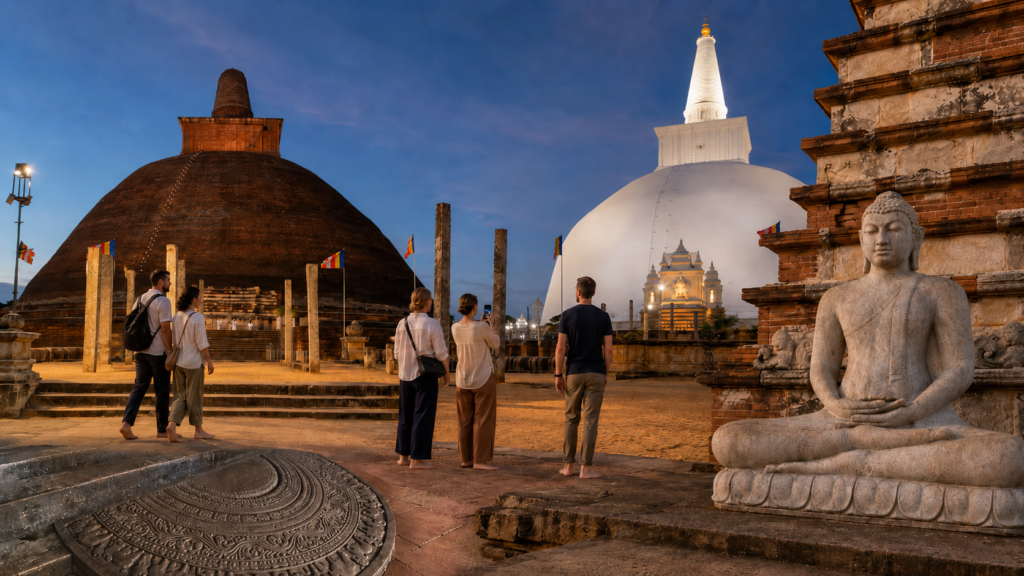
Sri Lanka Cultural Heritage: A Small Island with an Extraordinary Story of Civilization, Culture & Colonial Legacy
Sri Lanka covers barely 65,000 square kilometres smaller than Ireland, smaller than West Virginia yet no landmass its size carries a denser layer of human history. Positioned at the crossroads of the Indian Ocean, directly beneath India’s southern tip, the island sat on the maritime Silk Road connecting Rome, Persia, Arabia, East Africa, India and China. Greek geographers called it Taprobane. Arab traders called it Serendib the root of the English word “serendipity.” Chinese monks, Portuguese admirals and British colonists all wrote about it, because every ship moving spices, silk or gemstones between East and West eventually passed within sight of its coast.
Inside this travel guide
- 01. More Than 2,000 Years of Recorded History
- 02. Buddhism and the Cultural Identity of Sri Lanka
- 03. Ancient Sri Lankan Engineering That Still Inspires the Modern World
- 04. Sigiriya: Where Engineering, Art and Royal History Meet
- 05. Anuradhapura and Polonnaruwa: Cities Built Around Civilization, Faith and Water
- 06. The Sacred City of Kandy and Sri Lanka’s Living Buddhist Traditions
- 07. Dambulla and the Story Told Through Sri Lankan Buddhist Art
- 08. Sri Lanka’s Indigenous and Rural Cultural Heritage
- 09. Traditional Crafts That Carry Generations of Knowledge
- 10. Food as Cultural Heritage
- 11. Ayurveda, Indigenous Medicine and Ancient Knowledge
- 12. Festivals, Rituals and Celebrations That Keep Heritage Alive
- 13. A Meeting Point of Different Religions and Cultures
- 14. Colonial Heritage and the Transformation of Sri Lankan Society
- 15. Why Sri Lankan Heritage Matters to Today’s World Traveller
- 16. How Travellers Can Explore Sri Lankan Culture Responsibly
- 17. Beyond Sightseeing: Travel as Cultural Learning
- 18. Protecting Sri Lanka’s Heritage for Future Generations
- 19. A Journey Through Sri Lanka Is a Journey Through Human History
01 More Than 2,000 Years of Recorded History
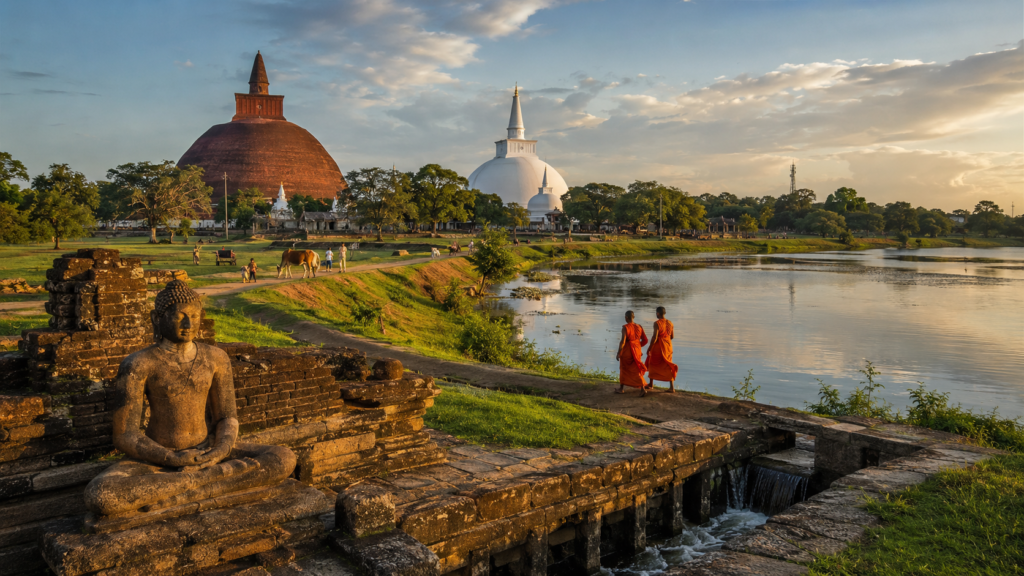
Sri Lanka’s written chronicles, the Mahavamsa and Dipavamsa, trace organized kingship back to the sixth century BCE, making the island’s recorded history among the longest continuously documented in Asia. From that founding period, civilization moved through distinct capitals, each one a chapter in the same unbroken story.
Anuradhapura rose first, serving as the political and religious capital for close to 1,300 years a span longer than most modern nations have existed at all. When it declined, Polonnaruwa took its place as a compact, fortified capital of temples and reservoirs. Later centuries saw power shift to Dambulla, then to the dramatic rock fortress of Sigiriya, and eventually to the hill capital of Kandy, which remained the seat of Sinhalese kings until 1815 making it the last independent kingdom in South Asia to fall to European colonization.
What makes this timeline remarkable isn’t just its length. It’s continuity. The Buddhist monastic institutions founded in Anuradhapura in the third century BCE still function today. The irrigation reservoirs built to feed those early cities still water rice paddies now. Festivals first recorded in ancient chronicles are still celebrated on the same lunar calendar. Few places on earth let a traveller walk through 2,000 years of history that never actually stopped happening.
👉 Click here to watch youtube video
Minneriya Tank
Parakrama Samudraya
Ancient Canals and Village Agriculture
02 Buddhism and the Cultural Identity of Sri Lanka
Theravada Buddhism arrived in the third century BCE, when the monk Mahinda traditionally described as the son of Emperor Ashoka of India met King Devanampiya Tissa at Mihintale. Within a generation, Buddhism was not simply a religion practiced on the island; it became the organizing principle of Sri Lankan civilization.
Its influence runs through nearly everything travellers encounter. Architecture shifted around the stupa, the monastery and the image house, producing building forms found nowhere else. Education centered on temple schools for over a thousand years before Western-style institutions existed, with monks serving as the island’s primary teachers and manuscript keepers. Art turned overwhelmingly toward depicting the Buddha’s life and teachings, giving rise to distinct regional styles of sculpture and painting. Meditation practice shaped a cultural attitude toward mindfulness, restraint and impermanence that still informs everyday interactions from how elders are addressed to how conflict is avoided.
Even Sri Lankans who practice other faiths live inside a society whose rhythms the full-moon Poya holidays, the vocabulary of respect, the emphasis on generosity and merit-making were shaped by this history. To understand Sri Lankan culture is, in large part, to understand how thoroughly Buddhist philosophy became civic life rather than remaining a private belief.
03 Ancient Sri Lankan Engineering That Still Inspires the Modern World
Long before “sustainable water management” became a modern policy phrase, Sri Lankan kings were building it. The island’s dry zone where rainfall is seasonal and unreliable could not have supported the great cities of Anuradhapura and Polonnaruwa without one of the ancient world’s most sophisticated hydraulic civilizations.
Engineers built cascading networks of reservoirs, called wewa, linked by canals so that water released from one tank fed the next, all the way down a river valley to the sea. Some of these reservoirs, like the Parakrama Samudra in Polonnaruwa, still irrigate farmland after 800 years. King Parakramabahu I is remembered for a philosophy that reads like a modern sustainability charter: not one drop of rain should reach the ocean without first benefiting mankind. Sri Lankan engineers also mastered the “bisokotuwa,” a valve-pit sluice gate that regulated water pressure and flow long before equivalent European technology existed an invention still studied by hydraulic engineers today.
This wasn’t infrastructure for its own sake. It was civilization-building: reliable water meant reliable rice harvests, which meant stable kingdoms, dense populations and the surplus wealth that funded temples, art and scholarship. Modern climate engineers increasingly look back at these cascading tank systems as models for resilient, low-carbon water management — proof that some of the best answers to today’s environmental challenges were engineered here more than a thousand years ago.
04 Sigiriya: Where Engineering, Art and Royal History Meet
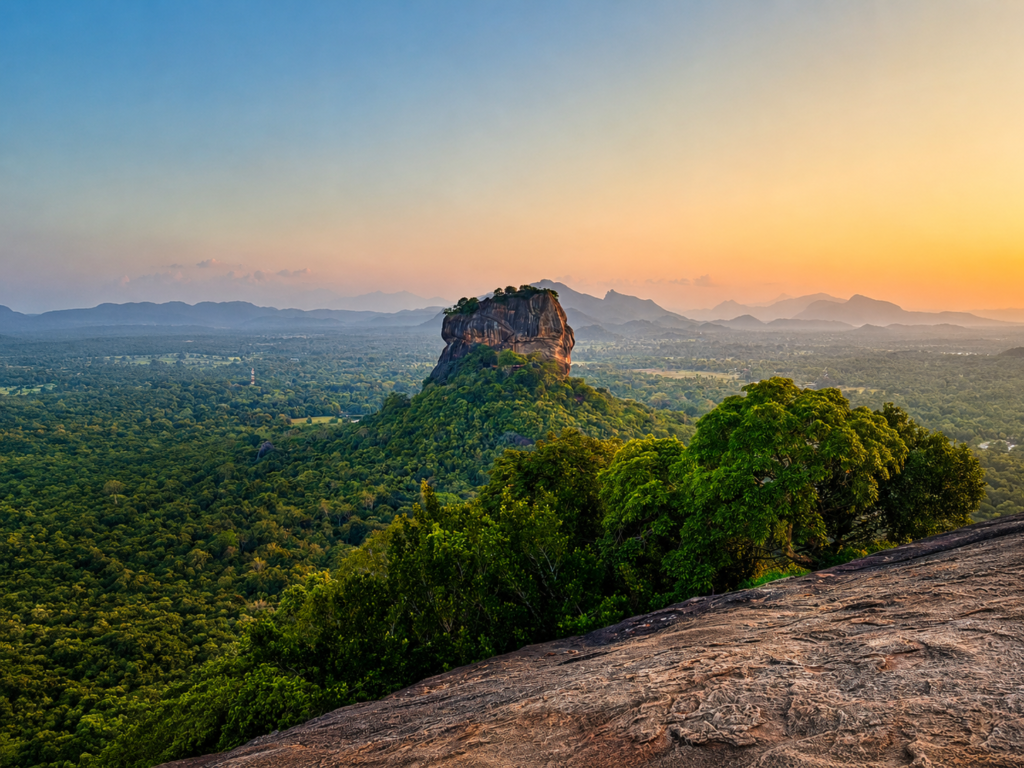
Sigiriya deserves more than a place on a sightseeing checklist. Built in the late fifth century CE by King Kashyapa, this 200-metre granite monolith was transformed in under two decades into a royal city combining engineering, art and political drama in equal measure.
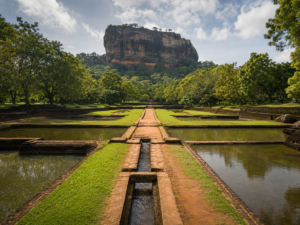
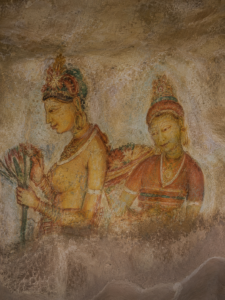
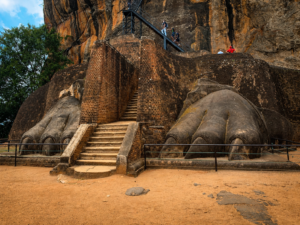
At its base, symmetrical water gardens use gravity alone to power fountains that still function during the rainy season today a hydraulic system designed 1,500 years before modern plumbing. Moving upward, visitors pass the famous frescoes of celestial maidens, painted in mineral pigments that have survived a millennium and a half of tropical weather. The polished Mirror Wall below them once reflected the king’s procession and now carries centuries of visitor graffiti-poetry, an accidental archive of medieval Sri Lankan language and sentiment. At the summit, the remains of a palace complex sit atop sheer rock, guarded by the enormous carved lion’s paws that gave the site its name “Sinha-giri,” Lion Rock.
The story behind the stone is just as compelling as the structure itself: a king who seized power controversially, built an almost impregnable capital out of fear and ambition, and ruled for barely eighteen years before the site was abandoned. Sigiriya isn’t simply a photogenic climb. It’s a complete portrait of fifth-century royal power, engineering ambition and artistic sophistication, compressed onto a single rock.
05 Anuradhapura and Polonnaruwa: Cities Built Around Civilization, Faith and Water
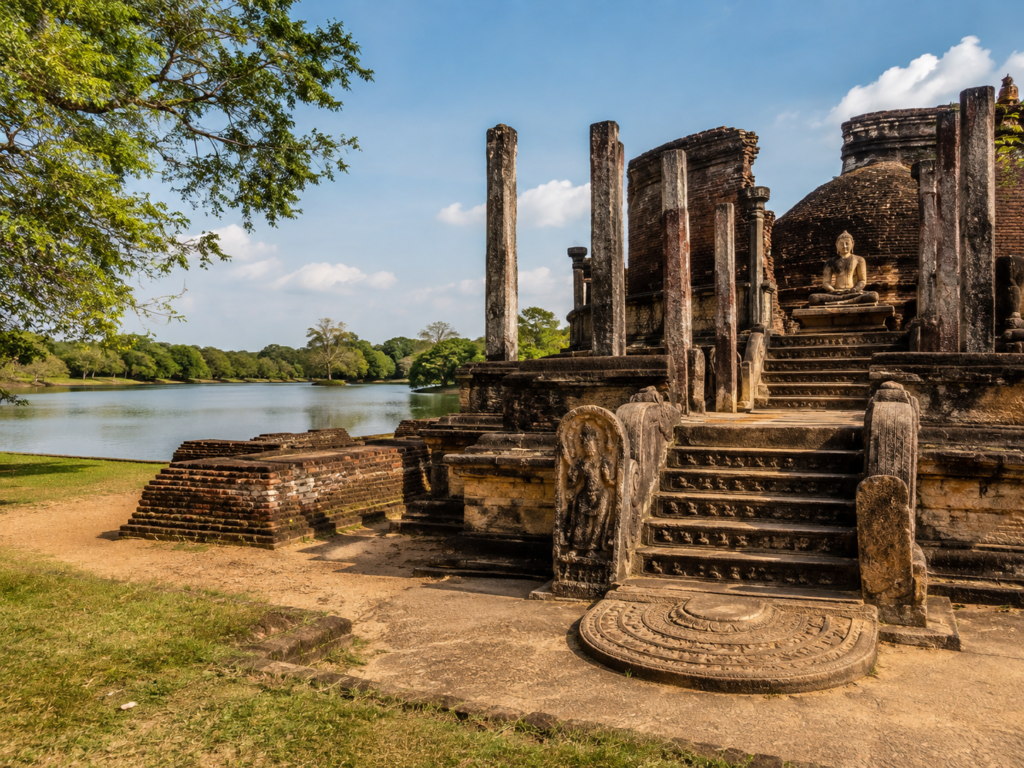
If Sigiriya is a single dramatic chapter, Anuradhapura and Polonnaruwa are the sustained narrative of Sri Lankan civilization. Anuradhapura functioned as capital for nearly 1,300 years, and its scale reflects that longevity: massive stupas some among the tallest brick structures built anywhere in the pre-modern world sit alongside monastery complexes that once housed thousands of monks, and the sacred Jaya Sri Maha Bodhi, grown from a cutting of the tree under which the Buddha attained enlightenment, is documented as the oldest continuously tended tree in human history.
None of this scale was possible without water. Anuradhapura’s builders linked reservoirs, canals and sluices directly into the city’s religious and administrative core, so that monastery, palace and irrigation network expanded together as a single planned system rather than separate projects.
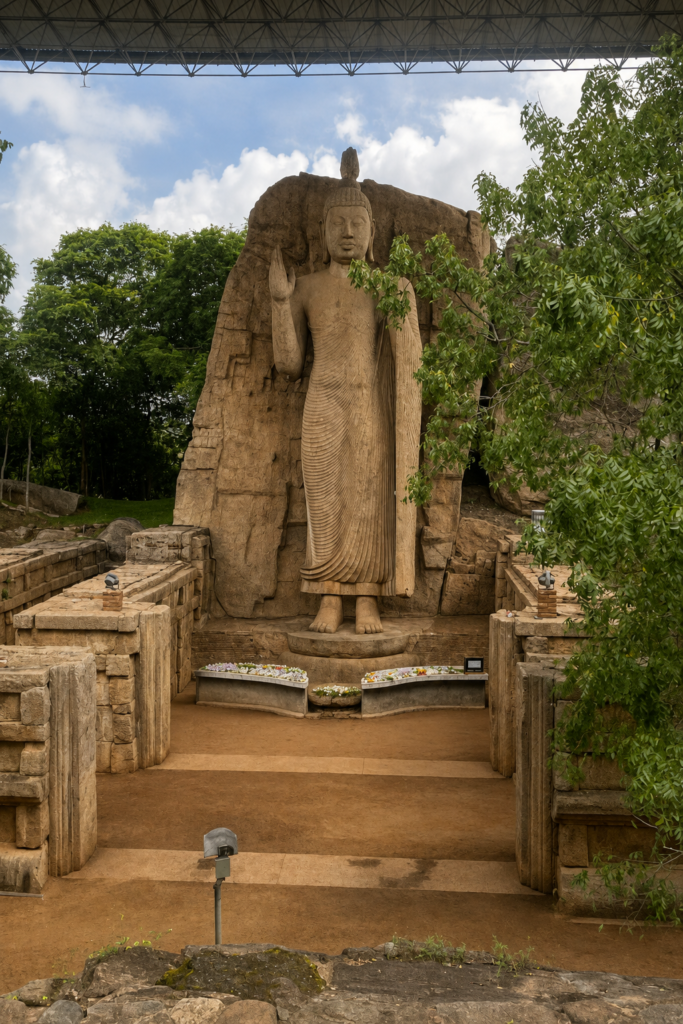
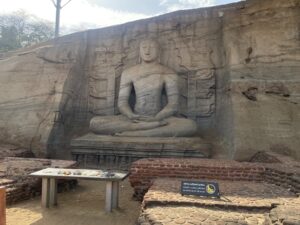
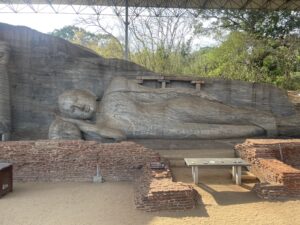
Polonnaruwa, capital from the eleventh to thirteenth centuries, compresses that same philosophy into a more compact, walkable archaeological park. King Parakramabahu I expanded the Parakrama Samudra reservoir to irrigate the surrounding plains, while the Gal Vihara rock temple produced four Buddha statues recumbent, seated and standing carved directly from granite with a technical precision still studied by sculptors today. Together, these two cities show something Western history books rarely emphasize: that faith, urban planning and water engineering in ancient Sri Lanka weren’t separate achievements. They were the same achievement.
06 The Sacred City of Kandy and Sri Lanka’s Living Buddhist Traditions
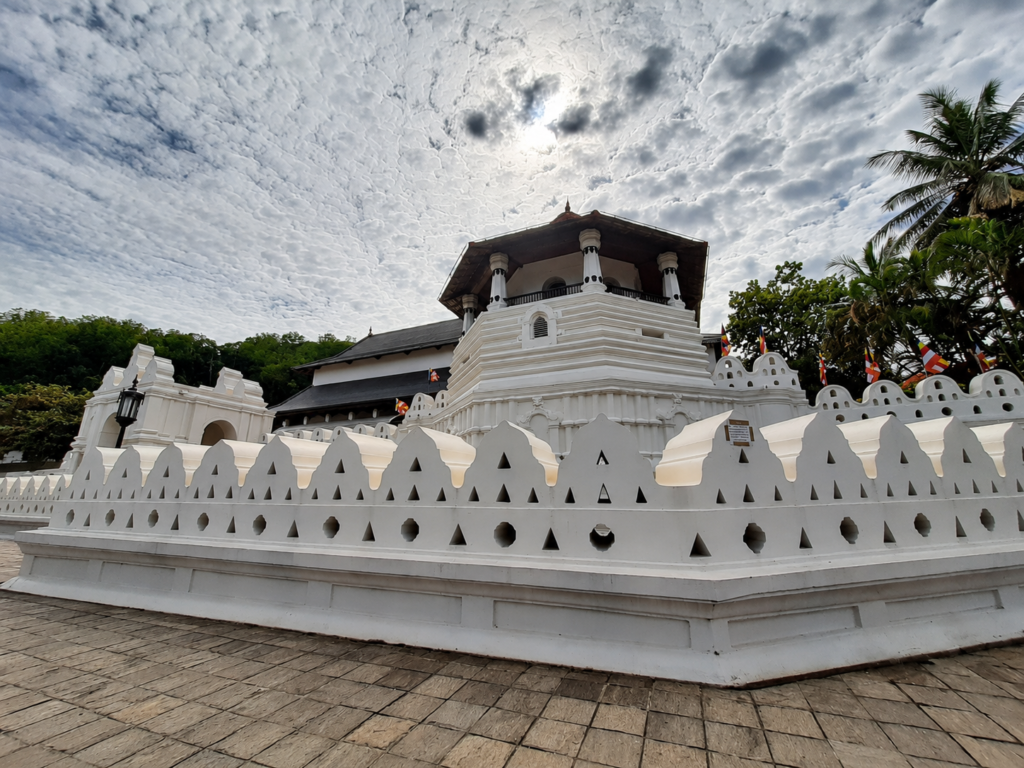
Kandy is where Sri Lankan heritage stops being archaeology and becomes a living, breathing daily practice. As the last capital of the Sinhalese kings, it held out against European powers until 1815, and it remains the spiritual center of Sri Lankan Buddhism today.
At its heart sits the Temple of the Sacred Tooth Relic, Sri Dalada Maligawa, home to what Buddhists believe is a tooth relic of the Buddha himself. Possession of the relic was historically tied to the right to rule, and the temple still functions as an active site of daily worship, not a museum. Each year, that devotion culminates in the Esala Perahera, one of Asia’s great religious festivals: ten nights of illuminated processions featuring elaborately costumed elephants, fire dancers, whip-crackers and Kandyan drummers performing rhythms passed down through generations of hereditary performing families.
Kandyan dance itself with its distinctive drumming, acrobatic movement and elaborate headdress developed as a ritual art form connected to temple ceremony, not entertainment invented for tourists. Watching it performed in Kandy today is watching a tradition that has been maintained, essentially unbroken, since the kingdom’s height. Few cities anywhere let visitors witness centuries-old royal and religious ritual performed exactly as it always was, by the descendants of the same families who performed it originally.
07 Dambulla and the Story Told Through Sri Lankan Buddhist Art
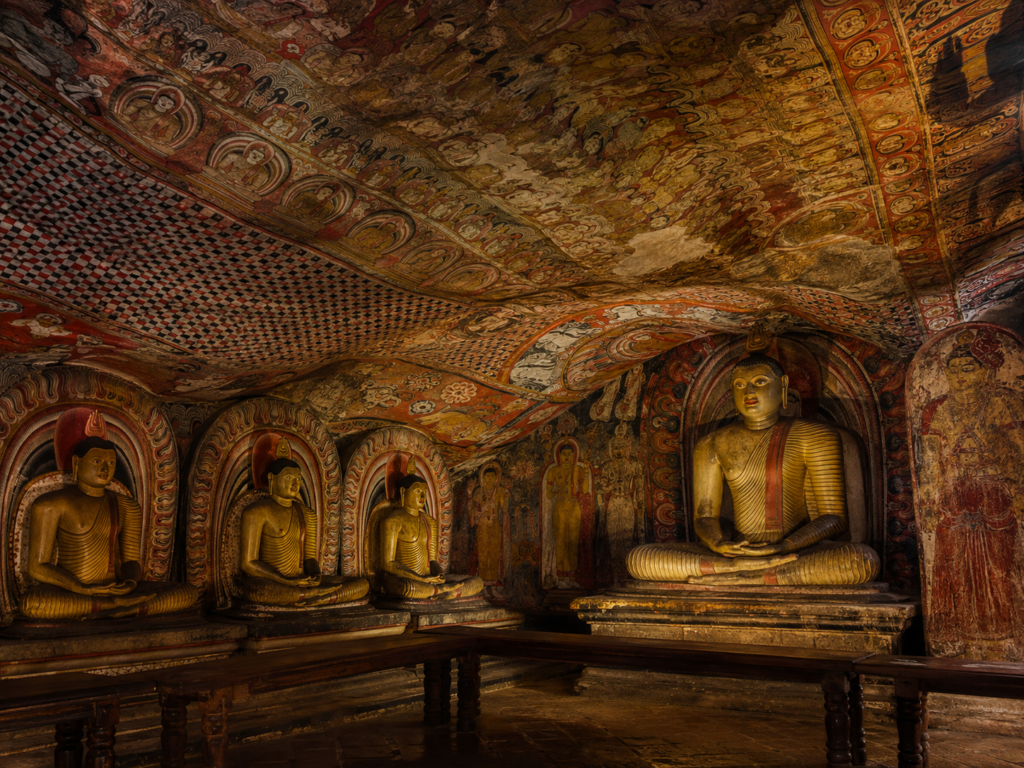
The Dambulla cave temple complex, expanded under King Valagamba in the first century BCE after he took refuge there during a period of exile, is Sri Lanka’s largest and best-preserved cave temple and effectively a two thousand year timeline of Buddhist art painted directly onto rock.
Five interconnected caves hold more than 150 Buddha statues in reclining, seated and standing postures, alongside ceiling and wall murals covering roughly 2,100 square metres. Unlike ruins that must be imagined from fragments, Dambulla’s paintings remain vividly intact, layered over centuries as successive kings and donors added their own contributions meaning a single cave ceiling can contain artistic styles separated by hundreds of years, painted directly on top of one another.
These aren’t decorative flourishes. Each mural sequence narrates specific events: the Buddha’s life story, the arrival of Buddhism in Sri Lanka, and the historical kings who protected the faith. Reading them is reading scripture and national history simultaneously, painted in mineral pigments by anonymous artists whose technical and spiritual skill still holds up under the scrutiny of art historians today. Standing inside Dambulla isn’t sightseeing it’s stepping into an active, unbroken visual library of how Sri Lankans have understood their own story for two millennia.
08 Sri Lanka’s Indigenous and Rural Cultural Heritage
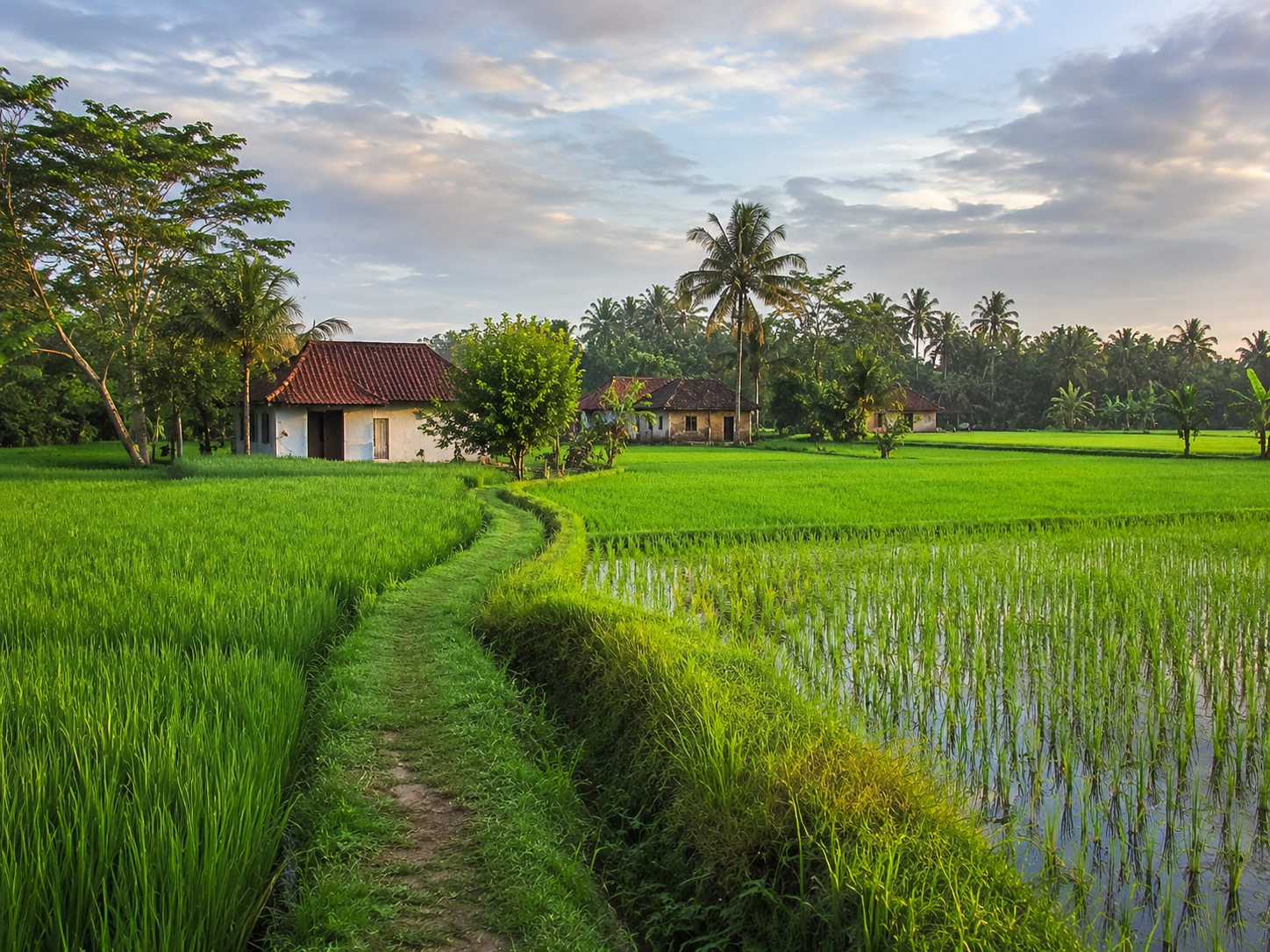
Beneath the monumental history of kings and temples runs an older, quieter heritage: the Vedda people, widely regarded as Sri Lanka’s earliest inhabitants, and the rural farming communities whose knowledge systems have shaped the island for centuries. The Vedda maintained a forest-based way of life hunting, gathering and honey-collecting built on an intimate understanding of seasonal cycles, plant medicine and animal behavior that predates the written chronicles entirely. Though their traditional lifestyle has narrowed under modern pressures, Vedda communities in areas like Dambana continue to preserve language, ritual and ecological knowledge found nowhere else.
Alongside this, the island’s village farming culture organized for centuries around the same reservoir-and-paddy systems built by ancient kings carries its own quieter form of heritage. Seasonal rituals mark the rice-planting and harvest cycle. Village elders pass down weather knowledge, seed-saving practices and communal labor customs, like the tradition of neighbors gathering to help with each other’s harvest. This rural world rarely appears on postcards, but it represents the direct, living continuation of the agricultural and ecological knowledge that made ancient Sri Lankan civilization possible in the first place heritage measured not in monuments, but in a relationship with land and season that has simply never been interrupted.
09 Traditional Crafts That Carry Generations of Knowledge
Every Sri Lankan craft tradition is a form of inherited memory, passed down through families and guild-like communities rather than taught in classrooms. In Ambalangoda, master carvers still produce the vividly painted devil-dance and Kolam masks used in ritual healing ceremonies, each design encoding specific spirits, ailments or stories understood within the tradition itself. In the Dumbara Valley, weavers produce geometric handloom mats using patterns and natural dye techniques documented since the Kandyan kingdom.
Brass and metalwork traditions, historically tied to temple commissions, produced oil lamps, ceremonial vessels and Buddha images still cast using methods passed master-to-apprentice. Lacquer work wood turned and coated in resin dyed with natural pigment decorates everything from walking sticks to jewellery boxes using a technique largely unchanged for centuries. Pottery communities continue producing clay cooking vessels and ceremonial ware by hand, without a wheel-driven industrial process. And in Ratnapura, the self-described “City of Gems,” gem cutting and appraisal skills for sapphires, rubies and the rare cat’s-eye chrysoberyl the island is famous for remain concentrated in families who have worked the trade for generations.
None of these crafts survive by accident. Each depends on a living artisan choosing to teach the next one. Supporting them directly — buying from workshops rather than mass-produced imitations — is one of the most concrete ways a traveller can help keep this knowledge alive.
10 Food as Cultural Heritage
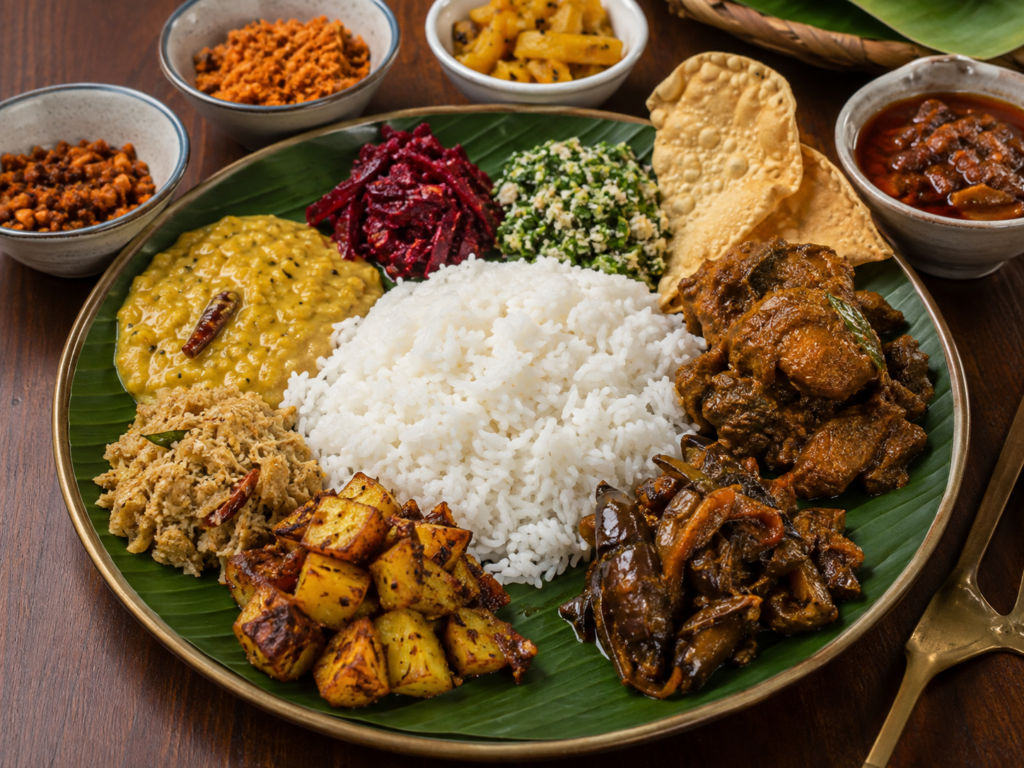
Sri Lankan cuisine is essentially edible history. Rice and curry the daily meal built around rice paired with multiple vegetable, lentil and protein curries reflects millennia of agricultural life organized around the same paddy systems ancient engineers built. Coconut appears in nearly every dish, from milk-based curries to the fermented palm sap, treacle and arrack that have flavored the island’s food and drink for centuries.
Spices tell an even bigger story. Ceylon cinnamon, native to the island and once so valuable that Arab traders deliberately obscured its true source to protect their trade monopoly, is still considered the world’s finest. Pepper, cardamom and cloves drew Portuguese, Dutch and eventually British traders to Sri Lankan shores meaning the island’s spice cabinet is, quite literally, the reason so much of its colonial history happened at all.
Cooking method carries heritage too. Village kitchens still use clay pots, coconut-husk fire and stone grinding tools that concentrate flavor differently than modern equipment. Ayurvedic principles of balancing “hot” and “cooling” foods shape traditional meal composition, treating food explicitly as medicine rather than separating the two. Regional variation matters as well Jaffna’s Tamil cuisine leans into fiery, tamarind-forward flavors, while the hill country and southern coast each carry their own distinct culinary identity. Eating in Sri Lanka isn’t a side activity to sightseeing. It’s one of the clearest, most accessible ways to taste the island’s trade history, colonial encounters and agricultural knowledge in a single meal.
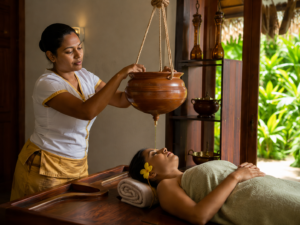
11 Ayurveda, Indigenous Medicine and Ancient Knowledge
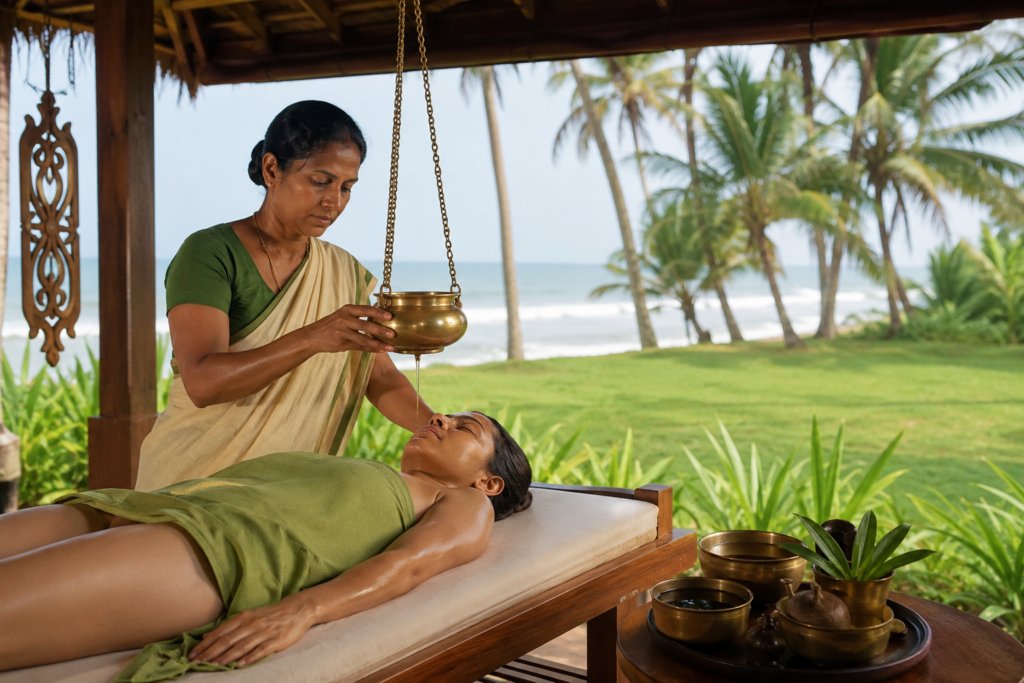
Alongside classical Ayurveda, imported and adapted from India over two millennia, Sri Lanka developed its own parallel indigenous medical tradition known as Hela Wedakama a body of herbal and diagnostic knowledge documented in ancient texts and, historically, preserved within specific families who guarded their formulas across generations.
Both systems share a core philosophy: health as balance between body, mind and environment, achieved through diet, herbal treatment, oil therapies and lifestyle rather than isolated symptom treatment. Sri Lanka’s tropical biodiversity supplied an extraordinarily rich pharmacy turmeric, coriander, gotukola, king coconut, neem and hundreds of other plants used in remedies ranging from digestive tonics to skin treatments still prepared by traditional practitioners today.
This knowledge wasn’t separate from daily life; it was daily life. Herbal porridges, medicinal leaf concoctions and Ayurvedic oil massage were household practices long before they became spa treatments marketed to travellers. For a modern audience increasingly interested in wellness, what’s notable isn’t that Sri Lanka has adopted Ayurveda as a tourism product it’s that the underlying knowledge is genuinely indigenous, family-inherited and continuously practiced, offering a far deeper wellness experience than a typical spa menu suggests when travellers seek out practitioners working from that authentic lineage.
12 Festivals, Rituals and Celebrations That Keep Heritage Alive
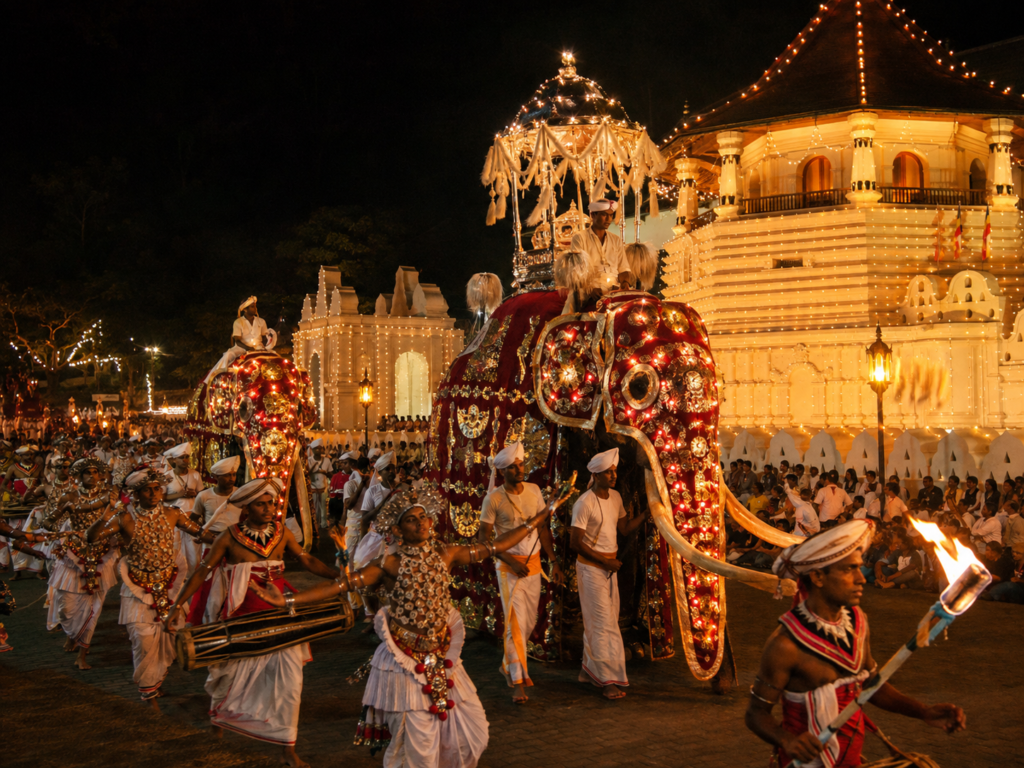
Sri Lanka’s calendar is punctuated by celebrations that make its layered heritage visible in real time. The Sinhala and Tamil New Year in April, timed to the sun’s astrological transition, briefly unites the entire island in shared rituals lighting the hearth at an auspicious hour, preparing traditional sweets, and visiting family regardless of ethnic or religious background.
Vesak, in May, marks the Buddha’s birth, enlightenment and passing in a single observance, transforming towns into displays of illuminated paper lanterns and elaborate pandals depicting Buddhist stories, alongside free food stalls offered purely as an act of merit. Poson, in June, specifically commemorates the arrival of Buddhism at Mihintale and draws pilgrims to that hillside in white clothing for an all night vigil. The Kandy Esala Perahera, held over ten nights around July and August, remains the grandest procession of all, while Hindu communities mark Thai Pongal and Deepavali with their own harvest and light-based rituals, and Muslim and Christian communities observe Ramadan, Hajj-linked celebrations and Christmas with equal visibility across the island.
What stands out isn’t just the number of festivals it’s that Sri Lankans of different faiths routinely attend each other’s celebrations. A Buddhist family lighting Vesak lanterns, a Hindu neighbor sharing Pongal rice, a Muslim household distributing Eid sweets to non-Muslim neighbors: these aren’t exceptions. They’re the ordinary texture of Sri Lankan community life, and travellers who time a visit around one of these festivals see the island’s heritage not as a museum piece, but as something actively, joyfully lived.
13 A Meeting Point of Different Religions and Cultures
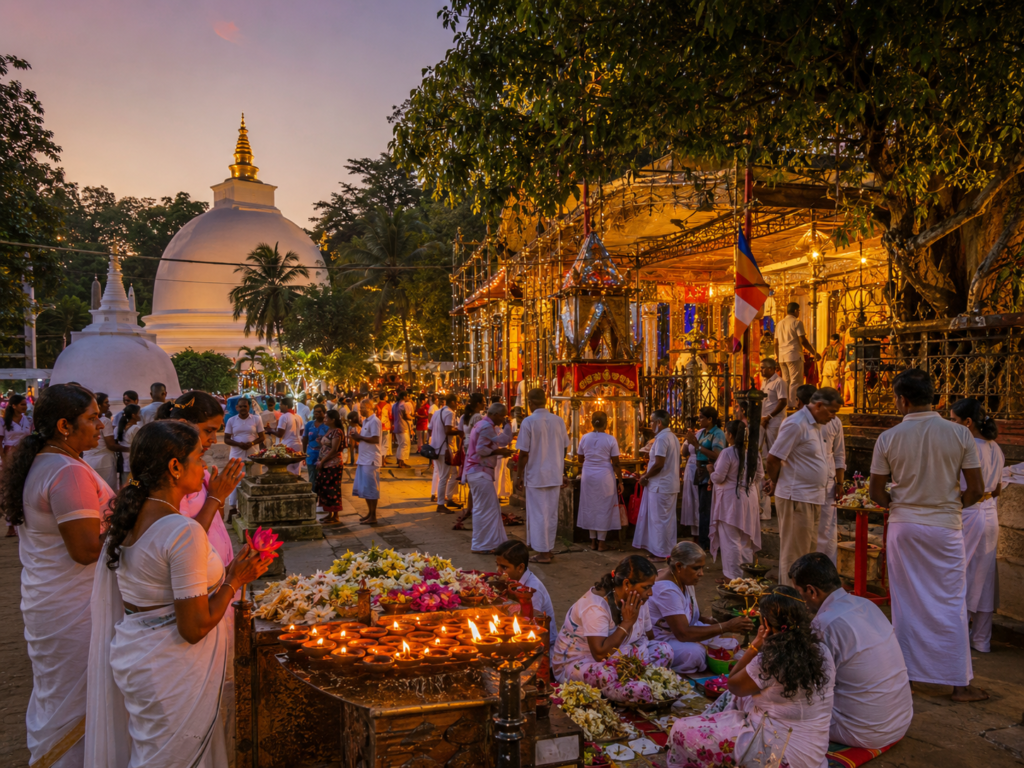
Sri Lanka’s religious landscape reads like a map of the entire Indian Ocean trade world. Buddhism arrived from India in the third century BCE and became the majority faith. Hinduism arrived alongside it and grew through centuries of Tamil migration and settlement, particularly in the north and east, producing distinct temple architecture and festival traditions. Islam arrived through Arab traders who settled along the coast from as early as the eighth century, forming the Moor community that remains central to the island’s commercial history. Christianity arrived later with Portuguese, Dutch and British colonization, layering Catholic, Dutch Reformed and Anglican traditions onto the existing religious landscape.
Rather than existing as separate, parallel communities, these traditions have repeatedly shaped each other. Some shrines, like Kataragama in the island’s south, are venerated jointly by Buddhists, Hindus and Muslims, each approaching the same sacred site through their own ritual framework. Architectural styles borrow across traditions. Culinary traditions blend at the household level in mixed communities. Multiple languages Sinhala, Tamil, and English as a connecting administrative language coexist in daily public life.
This layered coexistence isn’t accidental; it’s the direct result of the same trade geography that built Sri Lanka’s ancient wealth. A island positioned at the center of Indian Ocean commerce couldn’t help but become a meeting point for the people and beliefs that commerce carried with it. What survives today is one of Asia’s most genuinely multi-religious societies, hiding in plain sight for any traveller willing to look past a single-faith stereotype of the island.
gg
14 Colonial Heritage and the Transformation of Sri Lankan Society
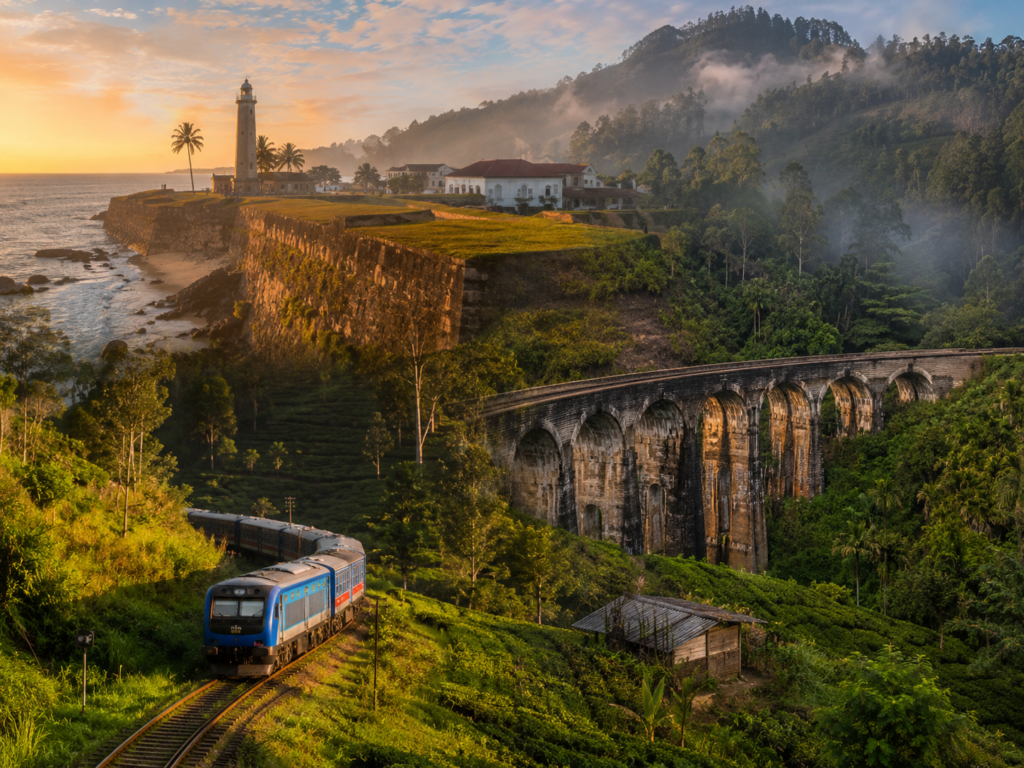
Three successive European powers reshaped Sri Lanka over roughly 450 years, and their fingerprints remain visible everywhere. The Portuguese arrived in 1505, drawn by the spice trade, and controlled coastal areas until 1658, leaving behind surnames, Catholic communities and early fortifications. The Dutch replaced them and ruled until 1796, building the canal systems of Colombo and, most famously, Galle Fort a walled city of cobbled streets and colonial architecture so well preserved it earned UNESCO World Heritage status and remains a living neighborhood rather than a static museum.
The British took full control by 1815, when they finally overcame the Kandyan kingdom, and transformed the island’s economy fundamentally. They introduced large-scale plantation agriculture, converting the central highlands into tea estates after the coffee industry collapsed to blight in the 1870s a shift that brought Tamil labor migration from India and reshaped the island’s demographic map. British engineers built the hill-country railway, an engineering feat through mountainous terrain still operating today as one of the world’s most scenic train journeys, and established the administrative, legal and educational systems that independent Sri Lanka inherited in 1948.
None of this colonial layer erased what came before it. Instead, it sits on top of the older civilization like a second historical stratum: Galle Fort’s ramparts a few hours from Kandy’s ancient temple; British railway stations serving towns first organized around ancient irrigation tanks. Understanding this period matters not because it defines Sri Lanka, but because it explains why the island looks the way it does today an ancient civilization wearing visible colonial scaffolding, still standing on its original foundation.
15 Why Sri Lankan Heritage Matters to Today’s World Traveller
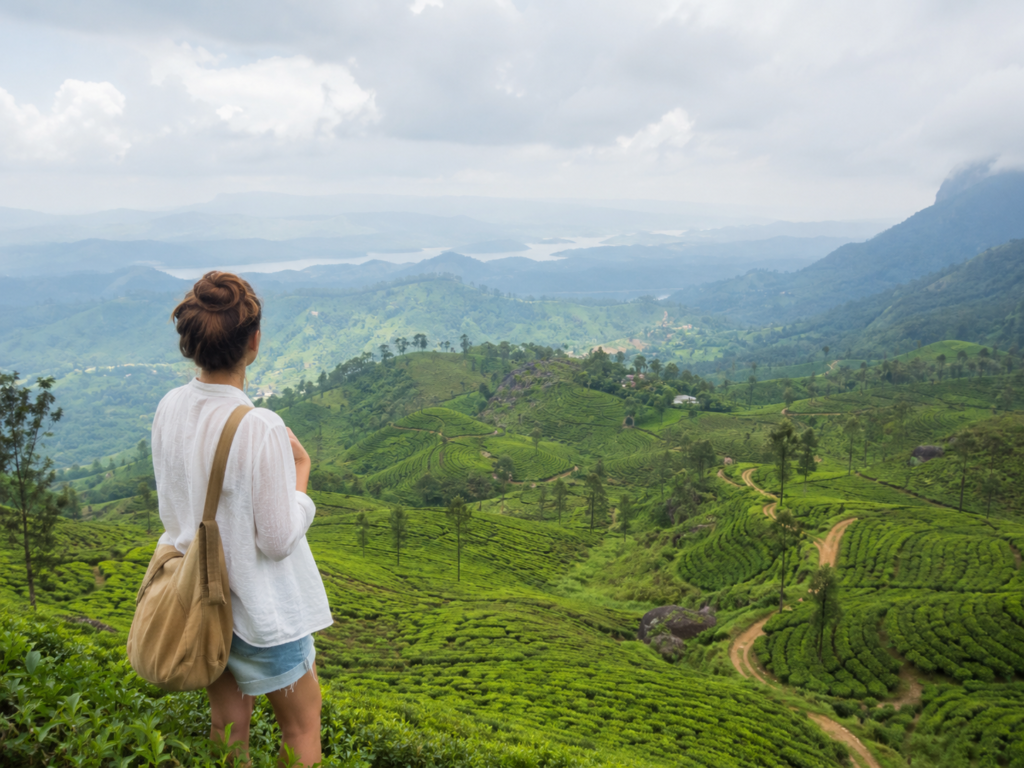
For a traveller, all of this history isn’t background reading it’s the difference between seeing a beautiful rock and understanding a 1,500-year-old feat of engineering, art and political ambition. In a travel landscape increasingly saturated with interchangeable resort experiences, Sri Lanka offers something harder to manufacture: continuity. A meal, a temple ritual, a craft technique experienced today connects directly to practices centuries or millennia old, not a modern recreation designed for visitors.
That continuity matters more now than it did a generation ago. Global travellers are increasingly drawn to slower, deeper trips fewer stops, more understanding and to destinations where tourism revenue visibly supports the preservation of something real rather than a manufactured attraction. Sri Lanka’s ancient engineering, in particular, offers something modern audiences are actively searching for: proof that sustainable, low impact water and land management isn’t a new invention, but a rediscovered one.
There’s also a simple, humbling lesson available here. Civilizations that mastered water, agriculture, art and governance a thousand years before modern nation-states existed have plenty to teach a world currently relearning the value of resilience and resource management. A trip through Sri Lanka’s heritage isn’t just sightseeing for the traveller paying attention, it’s a genuinely useful education in how a society builds itself to last.
16 How Travellers Can Explore Sri Lankan Culture Responsibly
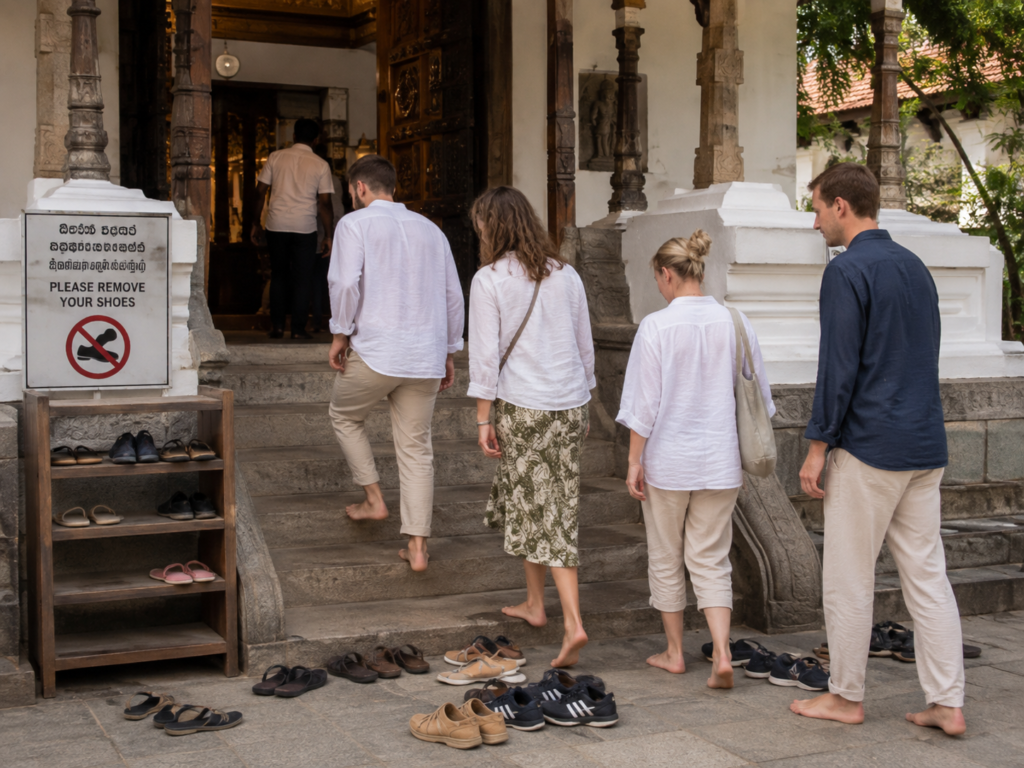
Respectful engagement with Sri Lankan heritage starts with a few concrete practices. At any active temple, cover shoulders and knees, remove shoes and hats before entering sacred areas, and never pose for a photo with your back to a Buddha statue a gesture widely considered deeply disrespectful, and in some cases legally enforced. Photography inside shrine rooms is often restricted; always ask before photographing monks, worshippers or ritual ceremonies, and accept a “no” gracefully.
Engage with communities on their terms rather than as a spectacle. Hiring local guides ideally from the region you’re visiting puts income directly into the community whose heritage you’re experiencing, and delivers far richer context than a generic tour script. When buying crafts, seek out workshops and artisan cooperatives directly rather than mass-produced souvenirs manufactured elsewhere and sold under a local label; ask where and by whom an item was actually made.
At sacred sites shared by multiple faiths, follow the specific customs of the tradition present, even if it differs from what you observed at the last temple. And resist the instinct to treat every ritual, procession or ceremony as a photo opportunity first some moments call for simply watching. Responsible travel in Sri Lanka isn’t a checklist of restrictions. It’s the difference between visiting a culture and intruding on one.
17 Beyond Sightseeing: Travel as Cultural Learning
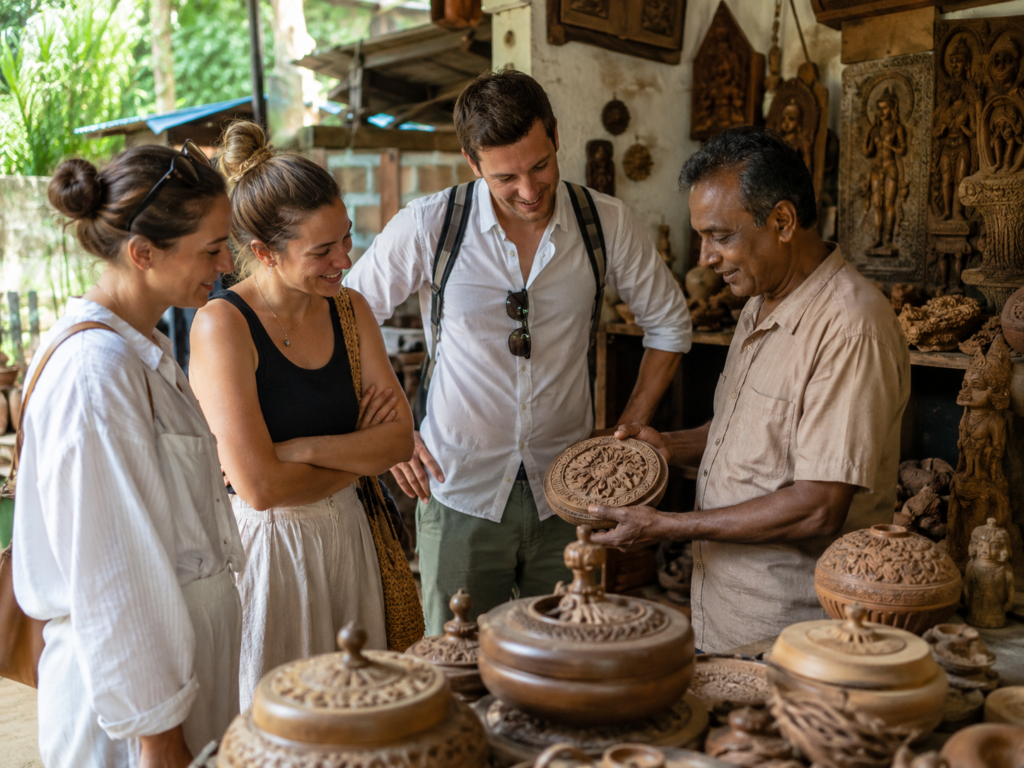
The richest way to experience Sri Lanka isn’t collecting landmarks it’s collecting encounters. Sit with a mask carver in Ambalangoda and ask what a particular design represents before buying it. Visit a spice garden not as a scripted stop but to genuinely understand why cinnamon shaped centuries of global trade. Share a meal cooked in a village kitchen, where the techniques and flavor logic reveal more about Sri Lankan history than any museum placard.
Where appropriate and invited, observing a temple ritual, a New Year custom or a harvest ceremony offers a window into values generosity, impermanence, communal obligation that no monument alone can convey. Ask questions. Ask about the story behind a stupa’s construction, the reason a particular festival falls on a specific date, or what a craftsman’s technique took years to learn. Most Sri Lankans, accustomed to a culture of hospitality, welcome genuine curiosity far more than passive observation.
This approach doesn’t require more time or a bigger budget it requires a shift in intention. A traveller who spends an afternoon talking with an artisan, a farmer or a monk walks away with something a checklist of ancient sites alone cannot provide: an understanding of why this heritage still matters to the people living inside it today.
18 Protecting Sri Lanka’s Heritage for Future Generations
Sri Lanka’s cultural assets face real pressure. Tropical climate accelerates the decay of murals and stone carving. Rapid, unmanaged tourism growth around sites like Sigiriya risks the very foot traffic and infrastructure strain that erodes what visitors come to see. Economic pressure on rural and artisan communities threatens the transmission of crafts and knowledge that depend entirely on someone choosing to learn them.
Responsible tourism offers a genuine, if partial, answer. Entrance fees at archaeological sites fund conservation work directly. Choosing accommodations and tour operators that employ local communities and pay artisans fairly keeps traditional skills economically viable rather than abandoned for more reliable income. Supporting community-based and heritage-focused tourism initiatives rather than purely extractive mass-market circuits channels travel spending toward the people actually maintaining this heritage, not just the sites themselves.
Preservation here isn’t only a government or UNESCO responsibility. It’s shaped, meal by meal and purchase by purchase, by how travellers choose to spend their time and money on the island. A traveller who buys directly from an artisan, hires a local guide, or chooses an operator committed to conservation is making a small but real contribution to whether this heritage is still intact for the next generation of visitors and, more importantly, for the Sri Lankans whose living culture it is.
19 A Journey Through Sri Lanka Is a Journey Through Human History
Sri Lanka was never meant to be simply visited. Its irrigation engineers were solving sustainability problems the modern world is still catching up to. Its monks preserved a religious and philosophical tradition unbroken for over two thousand years. Its artisans still carry techniques passed down through more generations than most family trees can trace. Its festivals still gather Buddhist, Hindu, Muslim and Christian communities under the same sky, celebrating in ways that predate most modern nations entirely.
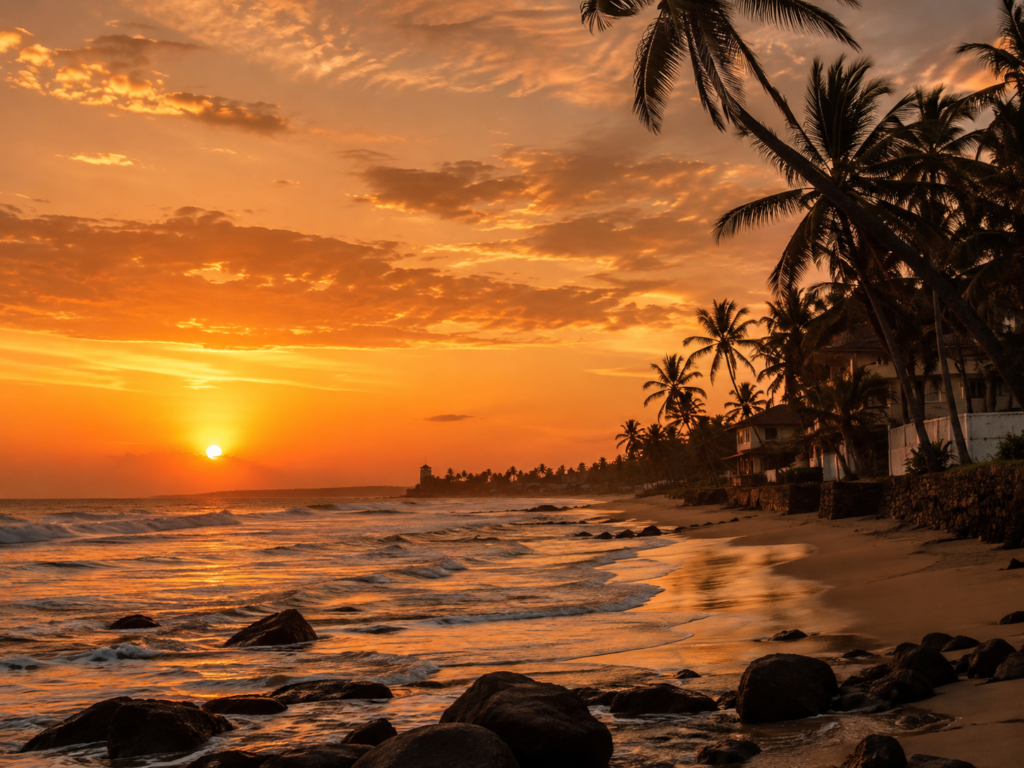
To walk through Sigiriya’s water gardens, kneel before Kandy’s sacred relic, or watch a mask take shape under a carver’s hands is to stand inside a story still being written by the people who inherited it. That’s the real invitation this island extends not to check sites off a list, but to understand a civilization, experience its living culture with humility, and help protect it for whoever comes next.
That is the journey worth taking. And it’s the journey we’d be honored to help you plan.
Ready to experience this heritage in person?
Let our local guides take you beyond the checklist into the temples, workshops and villages where this story is still being lived.