
World Tourism Day: Sustainable Travel in Sri Lanka
World Tourism Day: Sustainable Travel in Sri Lanka

World Tourism Day: Sustainable Travel in Sri Lanka
By The Wildlife Guardian Travels Sri Lanka
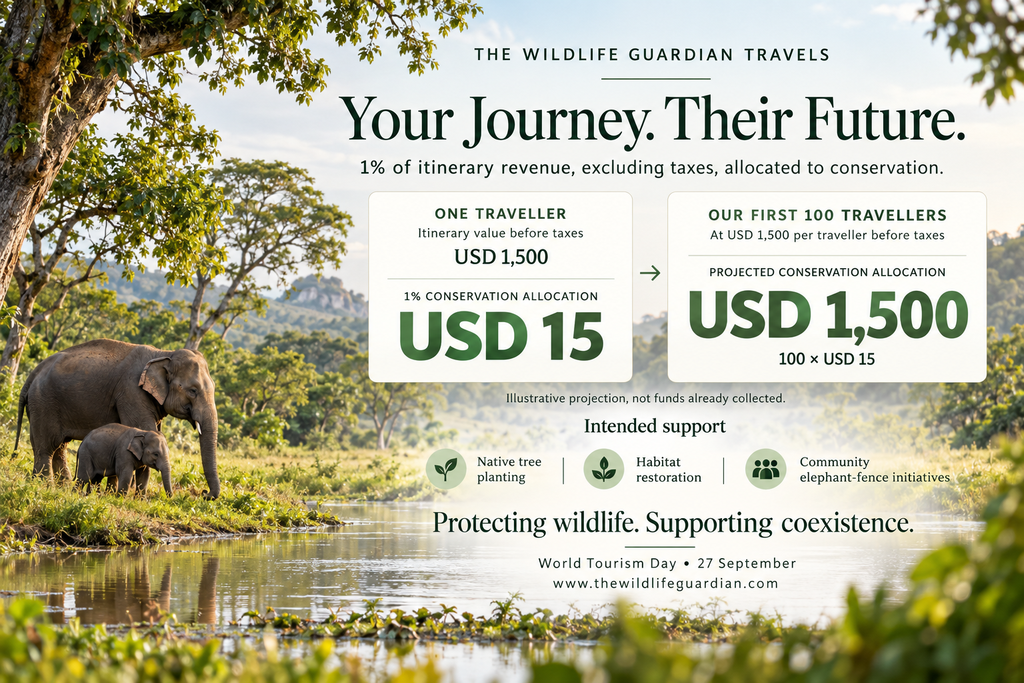
World Tourism Day 2026, celebrated on 27 September, is an opportunity to consider how our journeys affect the places we love. In Sri Lanka, sustainable travel means respecting wildlife, protecting natural habitats, preserving cultural heritage and supporting local communities. At The Wildlife Guardian Travels, we connect these responsibilities with thoughtfully planned experiences and a commitment to allocate 1% of each traveller’s itinerary revenue, excluding taxes, to nature and wildlife conservation.
Why World Tourism Day Matters for Sri Lanka
How Sustainable Travel in Sri Lanka Is Being Redefined by Real Action
World Tourism Day, observed on 27 September, invites us to consider how travel shapes the places we visit. For Sri Lanka a country where a single holiday can begin with elephants moving through grassland, continue through quiet hill country, and end beside the Indian Ocean that question carries particular weight. These experiences depend on healthy landscapes and the people who care for them, and a growing number of Sri Lankan hotels, communities, and travellers are proving that protection and enjoyment can go hand in hand.
This is not a story of distant ambitions. It is a story of certifications earned, forests replanted, turtles protected, and waste transformed. Here is how sustainable travel in Sri Lanka is actually working and how you can be part of it.
Message From The Wildlife Guardian Travels On World Tourism Day 27th Sep
Dear World Travellers,
Sri Lanka’s wildlife and natural landscapes are part of what makes a journey here unforgettable. For the animals that live here, these places are home. For neighbouring communities, they are closely connected to livelihoods, safety and everyday life.Human–wildlife conflict brings painful losses on both sides. Elephants and other animals lose their lives, while families face danger, damaged crops and uncertainty. Protecting wildlife must go hand in hand with helping people live safely alongside it.
At The Wildlife Guardian Travels, we believe that a business built around the beauty of Sri Lanka has a responsibility to help care for its future.That is why we allocate 1% of each traveller’s itinerary revenue, excluding taxes, towards nature and wildlife conservation. This commitment makes conservation part of our business purpose and connects each booking with an opportunity to contribute.
Our intended areas of support include:
🌱 Native tree planting and habitat restoration, with attention to long-term care.
🐘 Expert-guided, community-managed elephant fencing initiatives, appropriately located and maintained to protect people while respecting elephant movements.
🤝 Local conservation and coexistence initiatives, supporting the communities that share their surroundings with wildlife.
These contributions can grow with every journey. Together, they can help support practical conservation work and the people committed to carrying it forward.
We want future generations to experience Sri Lanka’s wildlife in its natural home, and local families to share that landscape with greater safety and confidence. When you choose Sri Lanka, we invite you to travel with care and help protect what makes this island extraordinary.
The Wildlife Guardian Travels Sri Lanka
Travel with purpose. Help protect their future.
The Wildlife Guardian’s 1% Revenue Share Contribution
What sustainable tourism mean for Sri Lanka
Sustainable tourism means working to reduce environmental harm while supporting local livelihoods, respecting culture, and keeping destinations enjoyable for future generations. It applies equally to a family beach holiday, a private wildlife safari, and a luxury wellness retreat.
For travellers, it starts with questions: How much unnecessary travel does this itinerary involve? Who benefits from my spending? How are wildlife and natural resources treated? A beautiful location is only one part of the experience; the practices behind it deserve attention too.
Tourism accounts for approximately 9% of global carbon emissions, and Sri Lanka is not immune to these pressures. Research from the University of Colombo has confirmed a strong long-term correlation between tourism arrivals and CO₂ emissions in Sri Lanka, with transport identified as a key contributor. A study of Unawatuna, one of the South Coast’s most popular destinations, found that laundry services provided by nearly 77% of establishments that further amplify emissions, especially in luxury hotels.
Understanding the environmental footprint of a holiday
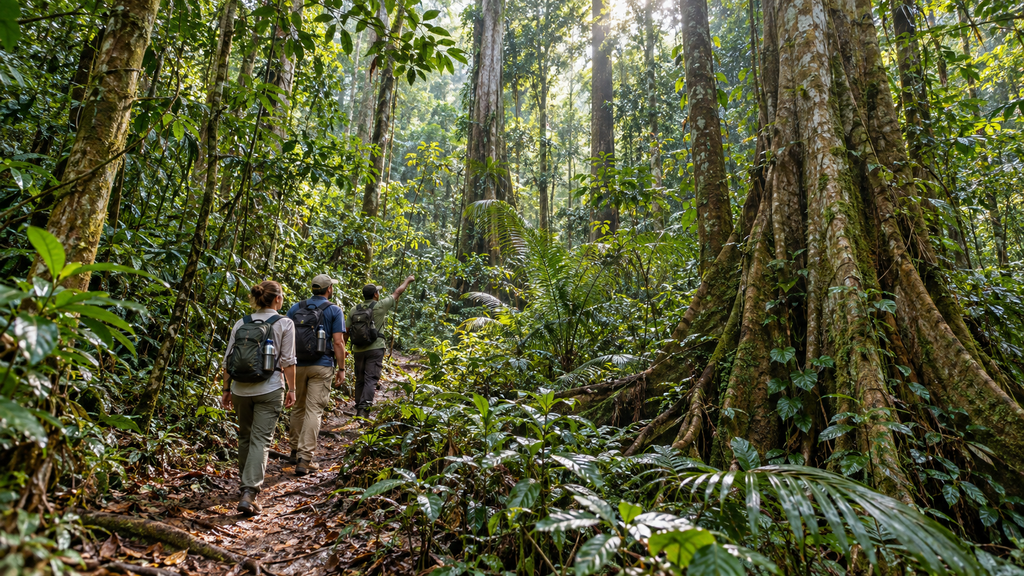
Flights and road journeys burn fuel. Hotels use energy and water, while meals, laundry and supplies add further demands. Tourism can also increase sewage, solid waste and pressure on habitats. UNEP identifies these connected impacts as reasons to build sustainability into tourism development. Read UNEP’s tourism overview.
Plastic has two connected consequences: its production creates greenhouse gas emissions, and discarded plastic can pollute ecosystems and harm wildlife. Reducing disposable packaging therefore supports a wider effort to use resources more carefully. Read UNEP’s plastic pollution explainer. Practical change begins before departure, when travellers and planners choose the route, accommodation and activities together.
What Travellers Can Do in Sri Lanka: Six Practical Choices
Sustainable travel is not about perfection. It is about informed decisions. Each of these ends with a question worth asking your hotel or planner — the answer tells you more than any brochure.



1 Plan a comfortable route with fewer unnecessary transfers
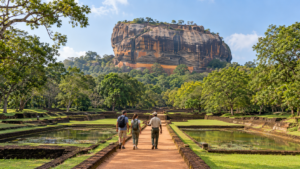
Choose a manageable number of destinations and allow time to enjoy each one. A stay in Sigiriya, for example, can provide a base for nearby cultural experiences. Ask your planner to group excursions geographically, match vehicle size to the group and avoid unnecessary engine idling. Compare flight options using credible emissions estimates where available.
Staying longer can spread the impact of one return flight across more holiday days, although additional nights still use resources. The full journey needs consideration, including any separate vehicle transfers alongside a train ride.
2 Choose accommodation with visible environmental practices
Ask hotels about energy use, safe drinking-water refills, wastewater treatment and waste collection. Look for clear explanations and credible certification where available. During your stay, switch off unused cooling and lights, report leaks and reuse towels when practical. Comfort and careful resource use can work together.
3 Reduce disposable plastic and food waste
Bring a reusable bottle and bag, refill only from safe drinking-water sources, and decline unnecessary packaging. At meals, order portions you can enjoy and return for more if needed. Hotels and restaurants can improve purchasing and portions by recording what is discarded. Measuring food waste establishes a starting point for improvement, a central principle in UNEP’s Food Waste Index work. Explore the Food Waste Index Report 2024.

4 Give wildlife space and protect natural places
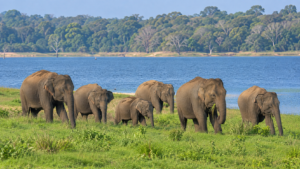
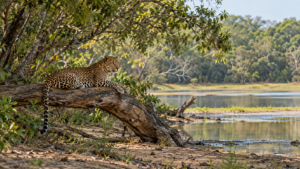
Choose guides who put animal welfare first. Keep a respectful distance, avoid feeding or touching wild animals, and decline experiences involving elephant riding or forced wildlife interaction. Ask safari drivers to avoid crowding animals or blocking their movements. On trails and beaches, take litter away and leave plants, coral and shells where they belong. Follow current site rules and ranger guidance.
5 Let local people benefit from your visit
Book local guides, enjoy locally run restaurants and buy crafts directly from makers where possible. Agree fair prices and ask permission before photographing people. Village visits should be welcomed by residents and arranged on their terms. Respect dress requirements, religious practices and quiet spaces at cultural sites.
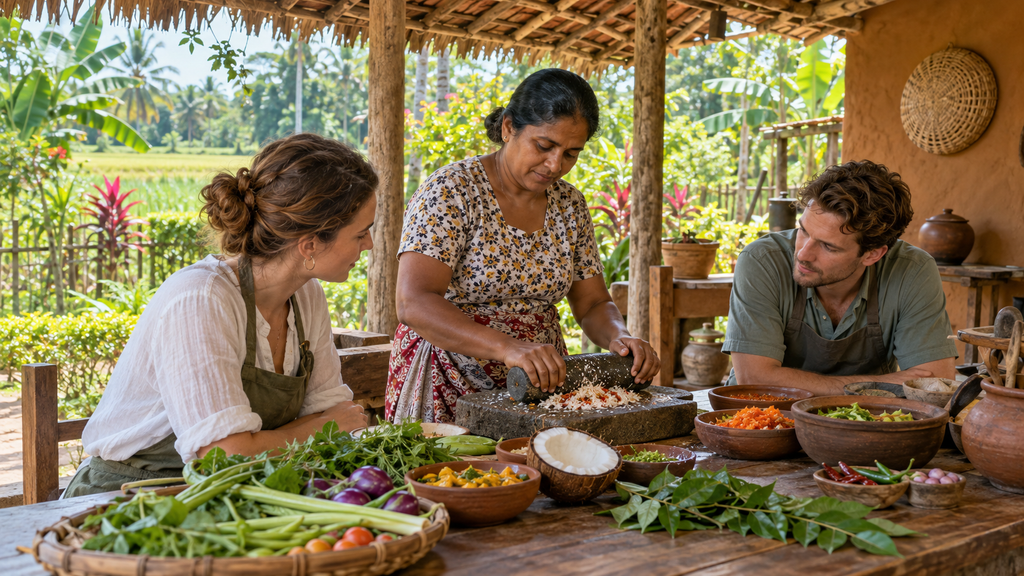
6 Choose a pace that respects the destination
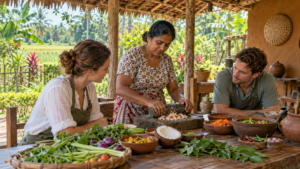
Allow quieter experiences, such as a guided walk or a locally hosted cooking session, to shape the holiday. Ask about suitable visiting times and alternatives to crowded attractions. Decisions should consider residents, seasonal weather, wildlife needs and your own comfort, with local advice guiding the final plan.

How Sri Lanka as a Country Is Driving Change
Individual hotel initiatives are powerful, but systemic change requires national frameworks. Sri Lanka is building them.
✅The National Sustainable Tourism Certification scheme
The Sri Lanka Tourism Development Authority, together with UNDP’s Biodiversity Finance Initiative (BIOFIN), developed a certification scheme aligned with Global Sustainable Tourism Council standards. As of June 2025, 37 hotels, one destination and 204 small and medium enterprises were certified, and the initiative has catalysed USD 4.026 million in investment for biodiversity.
✅Policy reform and investment
The Asian Development Bank approved a USD 100 million financing package in October 2025 to support Sri Lanka’s tourism sector through strategic policy reforms and targeted catalytic investments, aligned with the National Tourism Policy — a ten-year framework with the vision of making tourism a major engine of inclusive economic growth.
✅Marine tourism roadmap
In April 2025 Sri Lanka launched a Marine Tourism Roadmap to develop and promote sustainable marine-based activities including diving and shipwreck diving, extending the sustainability agenda beyond land-based tourism into coastal and marine ecosystems.
✅Circular Economy Potential
Research modelling suggests that circular economy practices in Sri Lankan hospitality could achieve up to 38% emission reduction and 22% operational cost savings. The barriers identified by hotel managers financial, technological and training are real, but certification and tourist demand are acting as enablers. The finding points to the importance of integrating policy measures such as incentives for eco-certification and regulatory guidelines for sustainable operations.
What We Can Do Better From Here : Our Best Practices By The Wildlife Guardian Travels
1. Reporting: close the measurement gap with data and AI
Most sustainability reporting in Sri Lankan hospitality is still annual, manual and retrospective, a spreadsheet assembled after year-end from utility bills and waste dockets. It satisfies the certifier. It is useless for managing the business, because by the time a variance is visible the quarter is closed. The fix is not a new pledge. It is the same discipline Hotel finance already applies to RevPAR, applied to resource intensity:
2. Travellers: make the good choice the easy one
Asking travellers to research certification schemes before booking is asking most of them to do nothing. The friction has to move to the industry side.
- Show the number at the point of booking. A single carbon-and-water figure per guest-night on the room page does more than a sustainability sub-page nobody visits.
- Make the certification mark mean something specific. “Travelife Gold , 147 criteria audited, last verified March 2026” tells a traveller more than a logo.
- Standardise the arrival briefing. Refill points, tap-water guidance, fair rates, temple etiquette and wildlife distance rules, in the same format at every certified property.
- Price the responsible option level, not premium. When a grouped transfer costs the same as a private one, uptake stops depending on virtue.
- Close the loop. Tell the guest at checkout what their stay actually used and what the conservation levy funded. Almost nobody does this, and it is the cheapest trust-builder available.
3. Policy: benchmarks, not badges
Certification counts have become the headline metric : 37 hotels, 204 SMEs. Counts measure adoption, not performance. A mature scheme reports the distribution, not the roll call.
- Publish an anonymised national benchmark of energy, water and waste per guest-night by property class and region, so any hotel can see its own quartile.
- Set a re-verification cadence and publish lapses. A certificate with no visible expiry date is a marketing asset, not a control.
- Tie the certification to the incentive. Accelerated depreciation on efficiency capex, or a tariff band for verified properties, converts the 22% modelled cost saving into a board-level decision.
- Fund the SME tier properly. The 204 certified SMEs carry the same reporting burden as a resort with a sustainability manager. Shared measurement services would cost less than the certification subsidy already being spent.
- Report total, not only intensity. Per-guest improvement alongside rising arrivals can still mean rising absolute impact, and arrivals are rising.
A Shared Responsibility
Travellers can ask informed questions and follow local guidance. Travel planners can design sensible routes and explain their supplier choices. Hotels, restaurants and transport providers can improve resource use, train their teams and provide fair working conditions. Public authorities can support reliable waste services, protect habitats and manage visitor pressure with local communities. Progress depends on these efforts working together.
Our Success Story Project In Sri Lanka
Rekawa : Where Responsible Tourism Helps Protect Sri Lanka’s Sea Turtles
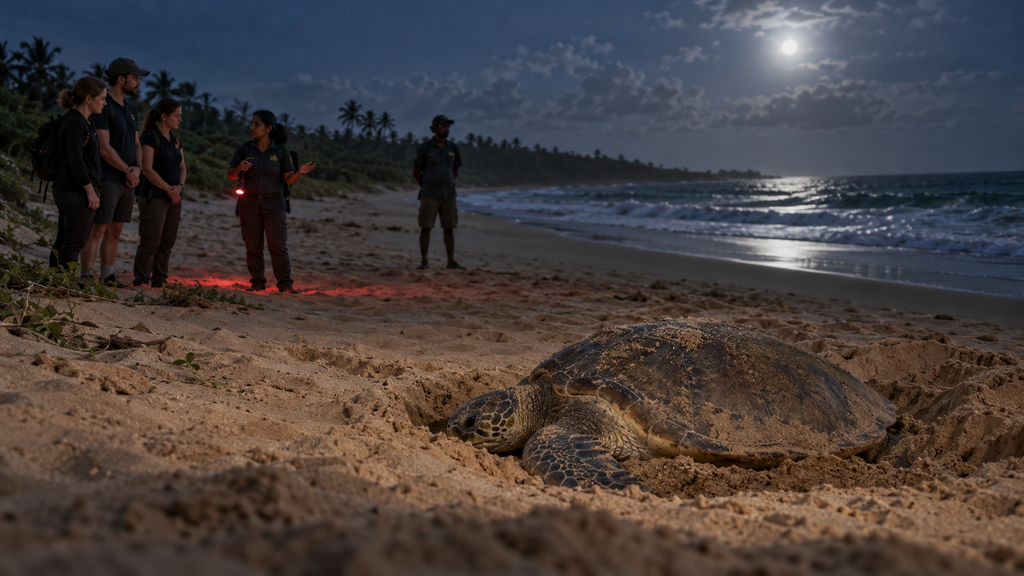
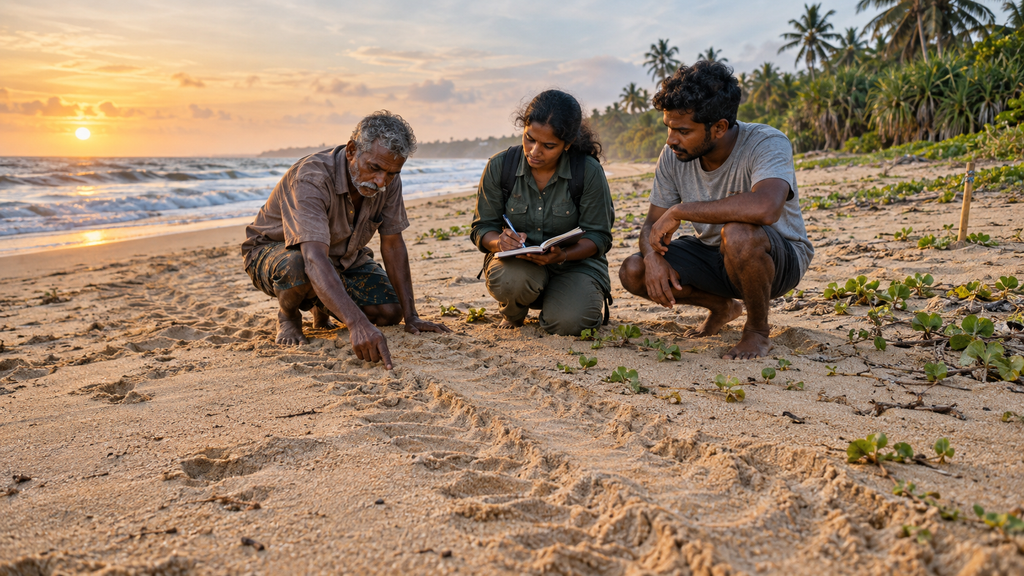
On Sri Lanka’s southern coast, near Tangalle, Rekawa offers an inspiring example of conservation supported by local people and responsible tourism.Since 1996, its community-based turtle conservation programme has protected nests on the beach where turtles naturally lay their eggs. One of its most meaningful achievements has been creating conservation livelihoods for local residents, including people who once depended on collecting turtle eggs. Their knowledge of the beach became an asset in protecting it.
Through guided Turtle Watch experiences, visitors can contribute to the practical work behind conservation, including nest protection, equipment and local livelihoods. The experience depends on patience and respect: turtles choose when to come ashore, and a sighting can never be guaranteed. For The Wildlife Guardian Travels, Rekawa demonstrates why conservation and community wellbeing belong together. When tourism provides a reason and the resources to protect nature, its benefits can continue long after a visitor returns home.
Further reading: Rekawa Turtle Watch · Nature Friends of Rekawa · September 2026 anniversary report
A responsible visit helps keep the beach a safe place for the next generation of turtles.