
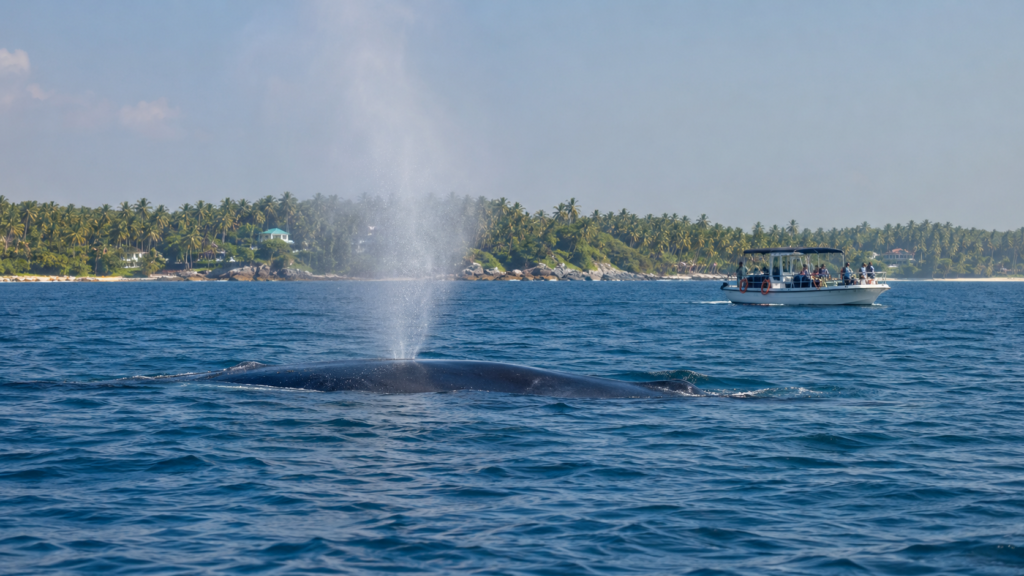
Mirissa whale watching Sri Lanka offers travellers a rare chance to witness blue whales in the Indian Ocean while enjoying Mirissa’s beaches, surfing, and coastal beauty.
Why Seeing Blue Whales in Mirissa Is a Unique Sri Lankan Experience
Off a small fishing town on Sri Lanka’s southern coast, the largest animal that has ever lived glides just beneath the surface. Mirissa whale watching offers one of the most reliable chances on Earth to see a blue whale in the wild — and you don’t have to sail far to do it. This guide covers the best time to go, what you’ll see, what to pack, how to make it fun for kids, and how to choose a tour that protects the whales as much as it thrills you.
Read more
Mirissa, one of Sri Lanka’s most famous southern coastal cities, offers travellers a rare combination of golden beaches, surfing waves, tropical sunsets, and unforgettable marine wildlife. Beyond its relaxed beach atmosphere, Mirissa is internationally known as one of the best places in Sri Lanka to witness the magnificent blue whale, the largest animal on Earth.
During the main whale-watching season, usually from November to April, the southern seas are calmer, giving travellers a better chance to sail a few kilometres offshore and experience these gentle ocean giants in their natural habitat. While The International Whaling Commission’s Whale Watching Handbook notes that blue whales are commonly observed off Mirissa between December and March, while many local operators describe the wider season as November to April depending on sea conditions.Seeing a blue whale rise from the deep Indian Ocean, breathe through its blowhole, and gracefully disappear beneath the waves is a truly emotional and once-in-a-lifetime moment.
What makes Mirissa special is that the experience is not only about whale watching. Travellers can enjoy beach relaxation, surfing, seafood, coconut-fringed coastlines, and nearby attractions such as Weligama, Galle Fort, and Sri Lanka’s southern wildlife routes. Mirissa beautifully reflects Sri Lanka’s uniqueness: a small island where beaches, adventure, wildlife, and ocean wonders come together in one unforgettable journey.
Why Mirissa Is One of the Best Whale Watching Spots on the Planet
Mirissa is considered one of the world’s remarkable whale-watching locations because Sri Lanka’s southern coastline sits close to deep Indian Ocean waters where blue whales naturally travel, feed, and surface. Unlike many destinations where travellers must sail far into the ocean, boats from Mirissa can often reach whale-watching areas within a few kilometres from the harbour, especially during the calmer season from December to March.
Read more
Scientifically, the waters off southern Sri Lanka are important for the Northern Indian Ocean blue whale, a unique population that is observed around Sri Lankan waters. The continental shelf, ocean currents, and nutrient-rich marine environment support plankton and small marine life, creating feeding opportunities for these giants. Blue whales, sperm whales, Bryde’s whales, and playful dolphins may also be seen during the journey.
For local fishing families in Mirissa, whales are not just tourist attractions. Many elders tell stories of seeing huge “sea shadows” long before whale watching became famous. Today, responsible whale watching gives coastal communities income while reminding visitors that these magnificent animals must be protected with respect, distance, and care.
What You’ll See on a Mirissa Whale Watching Tour
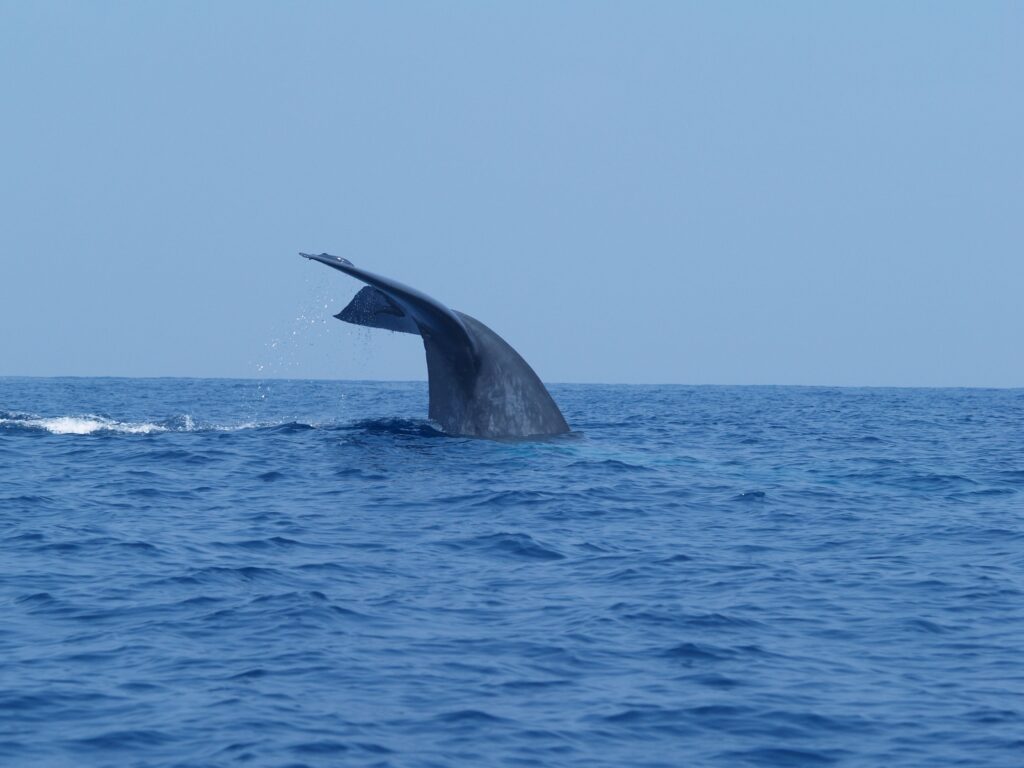
The headline act is the blue whale — up to around 30 metres long, roughly the length of a Boeing 737, with a heart the size of a small car. But it’s far from the only star of the show. On any given morning you might spot.
No operator can promise a sighting, this is wild nature, not a zoo ; but during peak season the odds are excellent, with reputable Mirissa operators reporting success rates above 90%.
- Blue whales – the largest animal on Earth
- Sperm whales – famous for their dramatic tail-fluke dives
- Bryde’s whales, and the occasional fin or minke whale
- Spinner and other dolphins, often in fast-moving pods
- Orcas (killer whales) – rarer, but seen in some seasons
- Pilot whales, plus sea turtles and, with luck, a passing whale shark
Best Time for Whale Watching in Mirissa
The whale watching season in Mirissa runs from November to April, when the sea turns calm and blue whales move close to the coast. For the very best conditions, aim for January to March ,calmest seas, clearest visibility, and the highest sighting rates.
From roughly May to October, the southwest monsoon churns the southern ocean. Tours are often cancelled or simply don’t run, and the ride can be rough even when they do.
Tours leave early, most boats depart from Mirissa Fisheries Harbour between about 6:00 and 7:00 AM, when the water is calmest. A typical trip lasts around 3–5 hours, though it can run longer if the whales are further out. Weekends and holidays sell out fast in peak season, so book early.
Tip: Reserve your spot ahead of time. Check availability with The Wildlife Guardian → Click Here
What to Bring on Your Whale Watching Trip & Best Practices
- Seasickness remedies – take them before you board, even if you don’t usually get seasick. Ginger candies and motion-sickness wristbands help.
- Sun protection – sunscreen, hat, and sunglasses.
- Layers – mornings on the water can be chilly and breezy, but it warms up fast.
- A camera or phone with zoom, and binoculars if you have them.
- Water and a few snacks. Your package will include snacks & drinks during the journey
- Non-slip footwear – decks get wet.
- A light waterproof jacket for spray or a passing shower.
Your Journey Inclusion
Bottle Water
Breakfast
Fully Insurance Coverage
Hotel Pickup
Life Jackets & Life Rings
Fruit Platter
Presentation & Guidelines
Sea Sickness Medicines
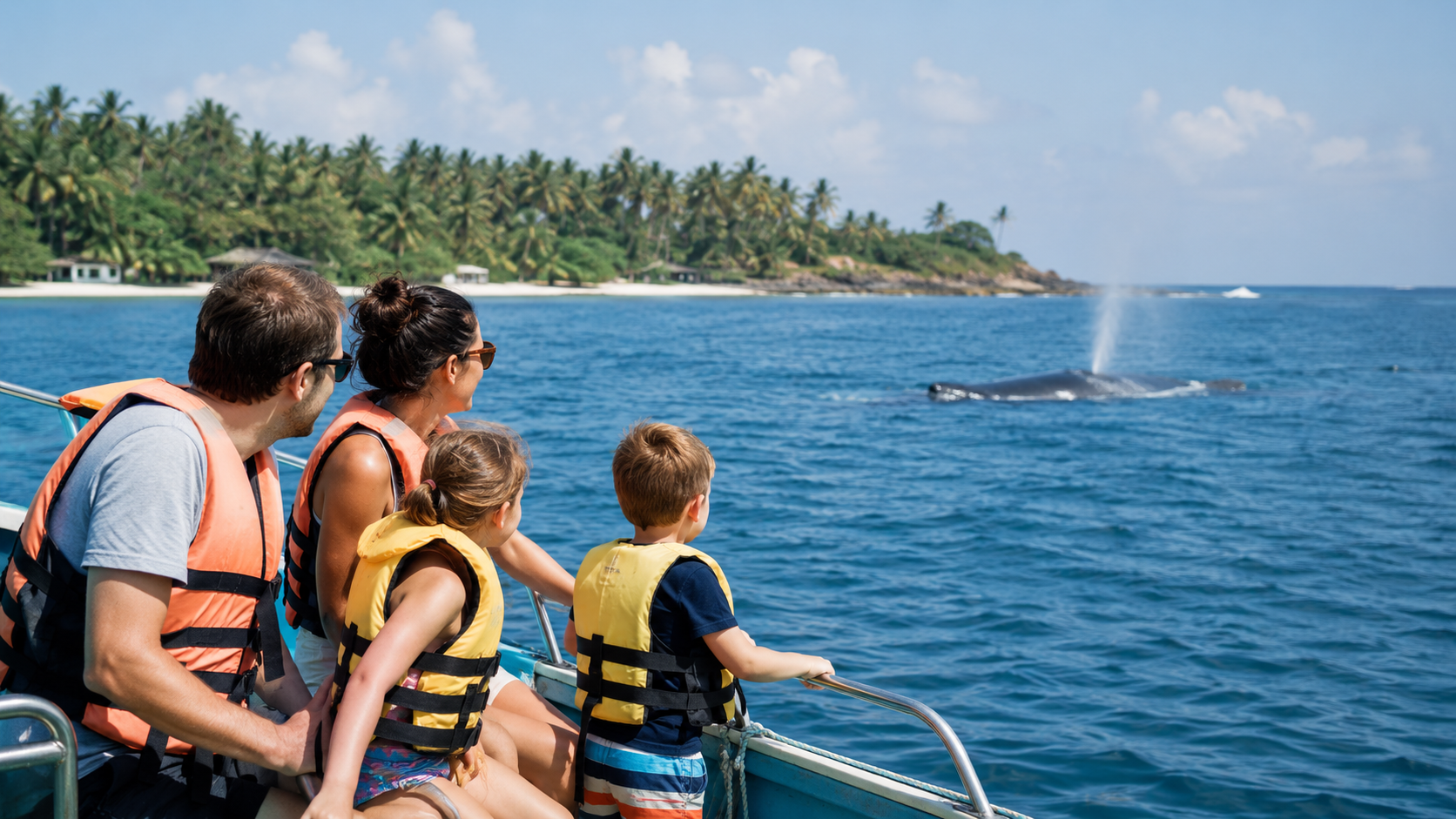
Whale Watching in Mirissa with Kids: A Family Adventure
Mirissa is a wonderful introduction to marine life for children. A few things make it smoother for families:
- Best for ages around 7 and up. Younger children can come, but consider how they cope with early starts and a few hours on a boat.
- Turn it into a game , A simple “spotting checklist” of whales, dolphins, and seabirds keeps kids engaged during the quieter stretches.
- Manage expectations gently , explain that whales are wild and don’t appear on schedule.
- Pack child-friendly anti-nausea options, snacks, water, and a light jacket.
👉Make a Full Family Day of It in Mirissa
- Mirissa Beach – a safe, sandy bay perfect for swimming and sandcastles.
- Parrot Rock – a little island formation you can climb at low tide for a great view.
- Coconut Tree Hill – the iconic palm-covered headland and the spot for your family photo.
- Snorkelling and turtle spotting at nearby beaches, plus the historic fort town of Galle within easy reach.
Why Responsible Whale Watching Matters
Blue whale numbers in these waters face real pressure, partly from busy shipping lanes, and how a boat behaves around the animals genuinely affects their welfare. A responsible Mirissa whale watching tour should keep a respectful distance and never chase or crowd the whales, follow international whale watching guidelines and government rules, run licensed boats with life jackets and proper safety gear, and carry a knowledgeable guide who shares the science.
At The Wildlife Guardian, this is the whole point of what we do. Our crews put the animals first, we slow down, hold our distance, and let the ocean reveal itself. More often than not, patience is rewarded with a closer, calmer, and more magical encounter than the boats racing past us ever get.
See whales the right way. Book a responsible tour with The Wildlife Guardian 👇
How Much Does a Mirissa Whale Watching Tour Cost?
Standard tours generally run from around USD $50 to $80 per person, usually including the boat trip, basic refreshments or breakfast, safety equipment, and often hotel pickup from the Mirissa area. Many operators offer reduced rates for children and free passage for very young kids. Always confirm what’s included — and the bad-weather and cancellation policy — before you book.
How to Book Your Mirissa Whale Watching Tour
- Choose your dates within the November- April season (January–March for the best conditions).
- Pick a responsible, licensed operator – read recent reviews and check their ethics, not just their price.
- Book ahead, especially for weekends, holidays, and peak months.
- Arrive early for the 6 -7 AM harbour departure, dosed up on seasickness remedies and ready for an unforgettable morning.
Your blue Whale adventure starts here. Check availability and book with The Wildlife Guardian
Great content! Keep up the good work!
Thank you very much for your comment